Anúncios
Improving your credit is important. A better score means lower rates on loans and less interest on credit cards. It can even help you with insurance and renting homes in the U.S.
Anúncios
This guide offers easy-to-follow advice on fixing your credit and raising your score. We’ll cover everything from how FICO and VantageScore work to keeping an eye on your credit reports. We’ll also show you how to correct mistakes and manage your credit better.
Start by setting a clear goal, like boosting your score by 30–100 points in 6–12 months. Make a plan, keep track of your score monthly through credit monitoring or AnnualCreditReport.gov, and stick to good habits.
Whether you’re looking to get a better mortgage, car loan, or credit card offers, follow these steps. They’ll show you what to do and why it matters. Keep reading to learn how to make your credit score better.
Belangrijkste conclusies
- Better credit lowers borrowing costs and aids in renting and insurance.
- Learn about credit scores and check your credit report often.
- Apply effective credit repair methods to fix mistakes and improve your habits.
- Have a specific goal to increase your credit score quickly and monitor it monthly.
- Regular, timely payments and wise use of credit are key to improving your score.
Understanding How Credit Scores Work
Credit scores show how risky a borrower is to lenders. They use your payment history, amounts owed, and other factors to score you. Knowing how credit scores work helps you make big changes and set goals for bettering your score.
What credit scores measure and why they matter
Payment history is super important in scoring. Missing a payment can drop your score, but paying on time helps it grow. How much you owe affects your score too because it shows if you’re using a lot of your credit.
Having an older credit history helps your score. But, new credit checks or accounts might lower it briefly. The type of credit you have, like loans or cards, also matters to lenders.
Different scoring models: FICO vs VantageScore
FICO is a big name in scoring for home and car loans. VantageScore is used by some banks and apps. Understanding FICO vs VantageScore explains why your score changes depending on where you check it.
They differ in how they view paid-off debts and new borrowers. VantageScore might give scores to those with newer credit histories more often. Each lender picks a scoring model that fits their needs.
Range breakdowns and what constitutes a good score
FICO scores range from 300 to 850. The breakdowns are: 300–579 is poor, 580–669 is fair, and so on, up to 800–850 for excellent. These ranges help lenders decide on loan approvals and rates.
For homes, lenders look for high scores for the best deals. Car loans and credit cards might be okay with “good” scores but expect higher rates. Knowing these score ranges can guide your financial choices.
Common Factors That Affect Your Credit Score
Knowing what impacts your credit score helps make wise choices quickly. We’ll cover major factors and show ways to improve your score today.
Payment history and its weight
How important is payment history? Very. Missing payments or being late, and legal issues like bankruptcy hurt scores a lot. One late payment can really lower your score.
Negative marks can stay on your report for seven years. Making payments on time is the best way to get better scores.
Credit utilization and optimal ratios
Your credit utilization ratio compares your debt to your credit limit. It’s about how much you owe versus what you can spend. Lenders look at how much you owe on each card and overall.
Try to use less than 30% of your limit on each card. Having overall debt between 10% and 30% is good. Using less than 10% is even better for your score.
Length of credit history and account age
The age of your accounts shows how long you’ve had credit. Opening new accounts can lower this average age, which might lower your score a bit.
It’s smart to keep older accounts open. Do this unless there’s a good reason not to, like high fees or security issues.
Types of credit and recent credit behavior
Having both installment loans and revolving credit shows you can handle different kinds of debt. This is good for your score. Using loans and credit cards wisely helps.
But, a lot of new loans or hard inquiries at once can drop your score for a little while.
Practical priorities:
- First, address any late payments. This is the biggest factor in credit scores.
- Lower your credit use by paying off debt, not by closing cards. Closing them can affect your credit age and use ratio.
- Keep old accounts open unless you have to close them because of costs or potential fraud.
- Gradually mix your credit. Don’t open many new accounts too quickly.
How to Check and Monitor Your Credit Report Regularly
Checking your credit can help you catch mistakes or theft quickly. It’s good to review your credit fully once a year. Also, setting up alerts for big changes is smart. This way, handling your credit is less of a hassle and more effective.
Where to get free credit reports in the United States
You can ask for a free credit report yearly from each main bureau at AnnualCreditReport.gov. This means you can get one from each bureau every year. If you’re dealing with fraud or identity theft, you might get more. Also, big banks and card companies often let you check your score more often without charging you.
How to read and interpret your credit report
First, make sure your personal info is correct. Then, look over your account details. Check for account numbers, opening dates, current balances, and whether accounts are up to date or late. Also, review payment history for any missed payments and confirm recent activities.
Look at credit inquiries to see who’s checked your credit. Hard inquiries can lower your score, but soft inquiries don’t. See if there are any public records like bankruptcies or tax problems. If you find mistakes, write them down and get documents ready to challenge them.
Tools and apps for ongoing credit monitoring
Many trusted services offer alerts and insights about your score. Experian has both free and paid options for scores and identity theft protection. Credit Karma shows info from TransUnion and Equifax and points out possible issues. Credit Sesame and myFICO offer services focused on single or multiple bureau scores and identity monitoring. Also, card providers like Chase and Capital One give free updates and alerts.
Free services are good for getting alerts and basic identity safety. Paid services offer more detailed score information and help with fraud. Pick services based on your needs, like frequent updates, insurance against identity theft, or assistance with disputes.
To keep an eye on your credit, get a full report yearly from AnnualCreditReport.gov and check scores monthly with apps or credit card websites. Set up alerts for any big changes in your credit file. Also, make sure to use secure devices, strong passwords, and keep your personal info safe.
Steps to Dispute Errors on Your Credit Report
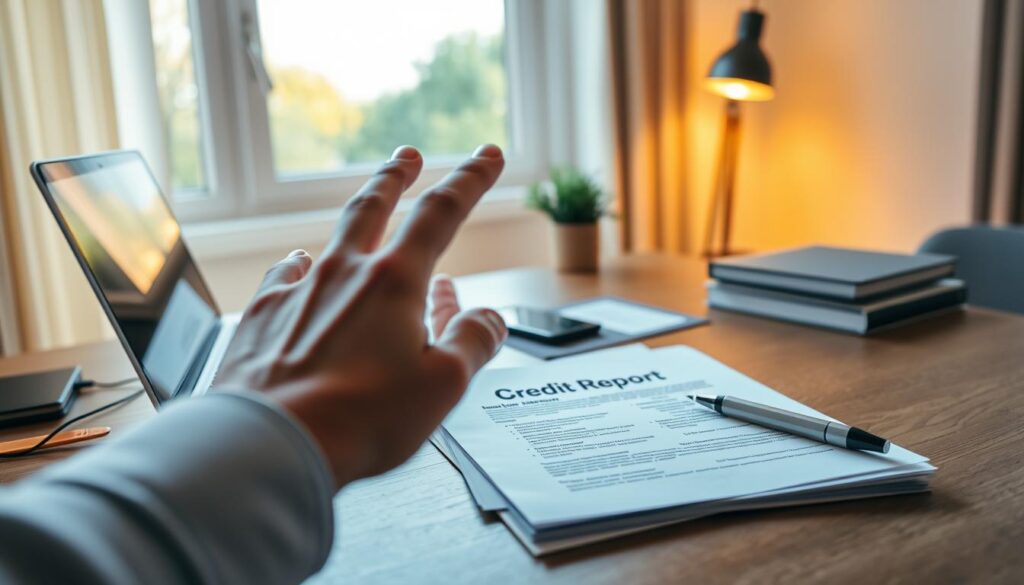
Finding mistakes on your credit file can be stressful. Quickly handling these errors protects your score. It also ensures your credit report is right. Here’s a guide to find errors, dispute them, and keep following up until everything is fixed.
Identifying common reporting errors
First, check your reports from Equifax, Experian, and TransUnion. Look for wrong personal info or accounts that aren’t yours. Also check for wrong balances or payment statuses, duplicate accounts, and outdated records.
Highlight every error you find. Note which bureau shows it. Even small mistakes, like a mistyped address, can cause big issues if not fixed.
How to file disputes with credit bureaus
Get a copy of your report that highlights the mistake. You can dispute it online or by mail. When you explain the problem, be clear and to the point. Say exactly what you want fixed or removed.
Always include any proof with your dispute. If the bureau doesn’t fix it, you can add a statement to your report. The Consumer Financial Protection Bureau can help if you get stuck.
Documentation and follow-up tips
Keep all originals and copies of important documents. These include statements, payment confirmations, and communications with creditors. Also include something for identity verification, like your driver’s license.
When possible, send disputes by certified mail and save the receipt. Bureaus usually have 30 days to investigate. If the mistake isn’t fixed, talk to the furnisher directly. You can also complain to the CFPB or ask for debt validation for collection accounts.
Record every interaction and mailed item. After fixing an error, check your credit reports again. Being persistent ensures your credit report is correct. It also prevents future mistakes.
| Step | What to Include | Expected Timeline |
|---|---|---|
| Identify error | Copy of report page, highlight incorrect item | Immediate |
| Prepare documents | Account statements, payment receipts, ID verification | 1–3 days |
| Submit dispute | Online form or certified mail to Equifax/Experian/TransUnion | File at once; bureau investigates |
| Investigation | Bureau contacts furnisher; review of proof | Up to 30 days |
| Follow-up | Contact furnisher, file CFPB complaint, add consumer statement | If unresolved after 30 days |
| Confirm correction | Obtain updated reports from all three bureaus | Within weeks after resolution |
Payment Strategies to Improve Your Score Faster
To boost your credit score, focus on paying bills on time. Start by deciding which bills to pay when money is tight. Paying important loans like your house and car first keeps your accounts safe.
Prioritizing on-time payments
On-time payments are key to good credit scores. Always pay at least the minimum by the due date. If you’re behind, catch up fast to avoid more late marks.
When money is tight, pay secured loans like your mortgage first. Then, take care of debts close to being written off. Regular, on-time payments will help your score rise over time.
Setting up autopay and reminders
Setting up autopay helps you never miss a payment. Use it to pay at least the minimum due every month. Also, set alerts to remind you to pay the full amount if you can.
Use calendar reminders and banking apps to keep track of bills. They make it easier to pay on time and stress-free.
Using payment plans wisely
If you’re struggling, talk to creditors early to set up payment plans. A plan can prevent your account from being written off. Always get an agreement in writing so you know how it will affect your credit.
Payment plans might change how your credit is reported. Always check this with your creditors. Keep every payment record and follow up if the reporting doesn’t match your agreement.
Being proactive and keeping in touch with lenders helps protect your credit during tough times.
Managing Credit Card Utilization for Better Scores
Keeping your credit card balances low is rewarded by credit scoring models. By understanding how credit utilization is calculated and when reports are made, you can control your scores.
How utilization is calculated
Credit utilization measures your balance against your limit. It is tracked both for individual cards and across all your accounts. The balance reported by card issuers at the statement closing date is used in most scoring systems.
Techniques to lower utilization without closing accounts
Paying down balances before the statement closing date helps. Also, making payments throughout the billing cycle keeps balances low.
Asking for a higher credit limit can also reduce utilization without cutting spending. Companies like Chase or American Express might review without a hard credit pull.
Moving balances to cards with lower utilization or a 0% balance transfer card is wise. Make sure to distribute balances to avoid high utilization on any single card.
Balancing multiple cards and credit limits
Don’t close old accounts as it reduces your available credit and raises utilization. Keep inactive cards open by making small charges and paying in full.
Opening new accounts may temporarily drop your score due to the inquiry and lower account age. Secured cards or being an authorized user on another’s card can help increase credit smartly.
If your balances are $2,000 against a $10,000 limit, your utilization is 20%. Paying $1,000 off before the statement closes drops it to 10%, boosting your score. The timing of your payment can make a big difference.
- Tip: Keep an eye on the statement closing dates to time your payments.
- Tip: Split big buys across several cards to avoid high utilization on one.
- Tip: Consider asking for a higher limit when your income or credit habits improve.
Smart Ways to Build Positive Credit History
Starting small and steady is the best way to build credit history. Choose tools that fit your needs and always pay on time. You’ll see changes in 6–24 months with consistent use of the right products.
Being added as an authorized user can speed up your credit improvement. Find a family member or partner with a good credit history. Make sure the issuer reports this to the major bureaus. Your score can improve from their good habits without you owing money.
Secured credit cards and credit-builder loans are reliable for lenders. With a secured card, a deposit you make sets your limit. For credit-builder loans, the lender reports your payments while keeping the money in savings. Both help build a solid payment record.
Having a variety of credit is good, but don’t overdo it. A couple of revolving accounts and some small loans are enough. Don’t open many accounts all at once. Regular payments and keeping balances low are what lenders look for.
Use this checklist to make good decisions:
- Make sure credit for authorized users is reported.
- Pick a secured credit card with fair fees and reporting.
- Look into credit-builder loans from community banks or unions.
- Apply for new accounts one at a time.
- Check your accounts each month to keep utilization low.
| Option | How it Helps | Typical Timeline | Key Action |
|---|---|---|---|
| Authorized user credit | Inherits positive payment history and available credit | 2–12 months | Verify issuer reporting and choose low-utilization accounts |
| Secured credit card | Builds revolving credit with a deposit-backed limit | 6–18 months | Keep balances low and pay on time each month |
| Credit-builder loan | Creates an installment payment record reported monthly | 6–24 months | Make every payment on schedule to establish history |
| Balanced mix of accounts | Shows ability to manage both revolving and installment credit | 6–24 months | Add accounts gradually and prioritize responsible behavior |
When and How to Handle Collections and Delinquencies
Having unpaid accounts can quickly harm your credit standing. Collections, charge-offs, and public records like bankruptcy can stay on your credit reports for seven years from the delinquency’s first date. While newer scoring models may not count paid collections, older ones might. It’s important to know these rules to make informed decisions that protect or boost your score.

Understanding the impact of collections
The impact of collections on your credit score differs by severity and the scoring model used. A recent collection can significantly lower your score, especially if it was high to begin with. Charge-offs and public records usually have a more significant and lasting effect. Some scoring models won’t continue to harm your score if the collection is paid, but lenders can still see the record.
Negotiating pay-for-delete and settlement options
Some collectors may agree to a pay-for-delete arrangement. This means they’ll remove the collection from your record once you pay. However, credit bureaus and collectors don’t have to agree to this, but some will. Always ensure agreements are documented in writing before paying.
Debt settlement allows you to clear a collection for less than what’s owed. This will halt further collection efforts, though your report will likely reflect a “settled” status instead of “paid in full.” Over time, this can still positively influence lenders’ perceptions, especially if paired with other good credit habits.
Rebuilding credit after a delinquency
Begin by updating any current accounts and turn on autopay to prevent future late payments. If you’ve been late once on a payment but have otherwise been timely, ask for a goodwill deletion from the creditor.
Improving your credit utilization and starting new positive accounts, like secured credit cards or credit-builder loans, are good steps. These actions will help rebuild your credit after a delinquency. The time it takes to see improvement depends on the initial damage. You might notice improvements in a few months, but recovering from bigger issues can take years.
When dealing with collectors, always ask for debt validation and be aware of your rights under the Fair Debt Collection Practices Act. Don’t make any payments without proper documentation. If you’re feeling overwhelmed, consider reaching out to nonprofit credit counseling or seek legal advice to explore your options in a safe manner.
| Action | Short-term Impact | Long-term Effect |
|---|---|---|
| Paying a collection with pay-for-delete agreement | Possible immediate removal from report if agreed in writing | Can restore score faster if removal is honored |
| Settling collection account for less | Stops collection calls and may improve lender view | Account shows as settled; scores improve gradually |
| Paying without documentation | Stops collection but record likely remains | Less boost to score compared with documented removal |
| Disputing errors or requesting validation | May pause collection activity during investigation | Correcting errors prevents improper damage to score |
| Using secured card or credit-builder loan | Adds positive payment history quickly | Helps rebuild credit after delinquency over months |
Credit Score Improvement for Specific Life Goals
Looking to buy a home, lease a place, get a car loan, or land a job? Your credit score is key. Small score changes can impact rates, deposits, and job offers. Start making improvements early with clear steps and realistic timelines.
Improving credit for mortgage
Lenders typically want a 620 score or more. FHA loans may be an exception with lower scores. To get the best rates and terms, reduce your debt, prove steady income, and correct credit report errors early.
Consistently paying on time for 6 to 12 months can really help your mortgage chances.
Preparing your credit for auto loans
Auto lenders categorize scores to determine APRs. A slight score increase can make your monthly payments lower. Compare rates, get preapproval, and avoid new credit inquiries before applying. Lower your credit use and keep accounts open for 3 to 6 months to boost your score for a car loan.
Credit considerations for renting and employment checks
Landlords and rental screeners look at your credit. A better score can mean easier approval and possibly lower deposits. For some jobs, especially in finance or security, employers check credit. Know your rights, and prepare explanations for any credit issues. Add references and income proof to your application.
Planning is essential to improve credit. Adjustments can show in 3 to 6 months, while a solid payment record takes longer. Start early to ensure your credit is in good shape for any checks.
Common Myths and Mistakes That Hurt Your Credit
Many believe quick fixes can instantly solve bad credit. This leads to costly mistakes that harm for a long time. This guide tells fact from fiction, helping you protect your score clearly.
Debunking myths about checking your own score
Some think looking at your score hurts it. This is false. Checking your score is safe and doesn’t lower it. Hard inquiries from lenders when applying for credit can drop points temporarily.
Monitoring your score with tools from Experian, TransUnion, or Equifax is wise. It lets you find mistakes or identity theft early, without damaging your score.
Why closing old accounts can lower your score
Closing old accounts can negatively impact your score. It lowers your available credit and can make your credit history seem shorter. This can increase your utilization rate and reduce your score.
Keep cards with low or no fees active with occasional use. Only close high-fee cards after considering the impact and planning for lost credit.
Avoiding payday loans and harmful short-term fixes
Payday loans can seriously damage your credit quickly. High fees and the need for more loans can lead to more debt and negative marks. Debt settlement services and quick fixes can be risky and costly.
Rather, look into nonprofit credit counseling or work directly with lenders. It’s your right to challenge mistakes for free and improve credit with good habits, avoiding expensive quick fixes.
| Misstep | Why it hurts | Better option |
|---|---|---|
| Not checking reports | Errors and identity theft go unnoticed | Regular soft-checks with bureau tools |
| Closing old cards | Raises utilization; shortens account age | Keep cards open with small periodic charges |
| Applying for many cards | Multiple hard inquiries lower score | Apply only when necessary; space out requests |
| Using payday loans | High fees; possible derogatory reporting | Nonprofit counseling; small-dollar personal loan |
| Pay-for-delete or shady repair | Often ineffective; can be illegal | Dispute errors yourself; use reputable counselors |
Tools, Apps, and Services to Support Credit Improvement
Finding the right mix of tools can make improving your credit easier. Choose tools that work with your lender’s scoring model. Make sure they offer two-factor authentication for security and have clear prices. Here are some good options to keep track of your credit, stay organized with your bills, and get help if you need it.
Credit monitoring services and alerts
There are both free and paid services that offer different levels of information. Experian CreditWorks and myFICO provide updates using specific scoring models. Credit Karma and Credit Sesame offer free monitoring and alert you to possible identity theft through strange account activity or inquiries. Services from TransUnion and Equifax can range from simple score checks to full-on identity theft protection with instant alerts.
If you’re choosing a service, make sure it shows data from the credit bureau important for your loan. Go for ones that explain the reporting model, alert you to new accounts or hard inquiries, and offer safe login features.
Budgeting apps that help maintain on-time payments
Budgeting apps help you avoid missing payments by connecting to your bills and sending reminders. Mint helps you organize your spending and keep track of bills. YNAB guides you to plan your budgets with future spending in mind to avoid shortfalls. Prism puts all your bill due dates in one place, while EveryDollar simplifies creating a monthly budget.
Banks and credit card apps offer autopay and balance alerts to maintain your payment history. Top budgeting apps can limit late payments and assist in managing your spending, helping to keep your credit utilization low.
When to consider professional credit counseling
Nonprofit credit counseling services are valuable if you’re struggling with debt or budgeting consistently. Organizations like the National Foundation for Credit Counseling and HUD-approved local agencies provide counseling, debt management, and negotiation help. These counselors can design a plan that improves the regularity of your payments and reports to credit bureaus.
Be careful with for-profit credit repair companies that offer fast results. Always check their credentials, understand their contracts, and confirm their fees are clear before agreeing to anything. Opt for credit counseling when you need organized assistance over a simple app’s capabilities.
Check the list below to quickly see what each service offers and find what suits your needs best.
| Service Type | Example Brands | Key Features | Best For |
|---|---|---|---|
| Credit monitoring tools | Experian, TransUnion, Equifax, Credit Karma, Credit Sesame, myFICO | Score updates, bureau/model shown, alerts for new accounts, identity-theft alerts, real-time vs monthly | Tracking score movement and detecting account changes |
| Best budgeting apps | Mint, YNAB, Prism, EveryDollar, bank apps | Spending categories, bill reminders, autopay links, budget goals | Preventing missed payments and managing cash flow |
| Credit counseling services | National Foundation for Credit Counseling, HUD-approved agencies | Nonprofit counseling, debt management plans, negotiation help, financial education | Structured debt relief and long-term budgeting support |
Conclusie
This summary shares the key steps to improve your credit score. Learn how FICO and VantageScore scores are formed. Always read your credit reports from Equifax, Experian, and TransUnion. Check these reports often, fix any mistakes, and always pay on time to help your credit grow.
To begin boosting your credit, follow a simple plan: get your credit reports, focus on the two biggest negative factors, set up autopay for bills, and lower the balance on cards with high utilization before the statement comes out. You’ll see credit score improvements in a few weeks to months for balance reductions. But, repairing your credit after big issues can take much longer, from months to years.
For lasting credit health, make good habits routine. Pay on time, keep your balances low, and consider secured cards or becoming an authorized user for extra help. Know your rights under the Fair Credit Reporting Act. If needed, turn to nonprofit credit counselors for advice. Small, regular efforts can lead to big credit score improvements.
FAQ
Why does improving my credit score matter?
A better credit score means you pay less in interest for loans and credit cards. It also helps with getting insurance, renting homes, and finding jobs that check your credit. By raising your score, you can save money and have more options financially.
What are the main credit scoring models and how do they differ?
FICO and VantageScore are the top models. Lenders prefer FICO, while fintech uses VantageScore. Both look at your payment history, debt, and how long you’ve had credit but handle things like collections differently. Knowing your lender’s preferred model helps you make smarter choices.
What factors make up my credit score and which are most important?
Your score is based on your payment history, how much you owe, the age of your credit, new inquiries, and the types of credit you have. Things like late payments hurt your score the most. Paying bills on time and managing how much you owe can quickly improve your score.
What credit score ranges are considered poor, fair, good, and excellent?
Scores range from 300–579 as poor, 580–669 as fair, 670–739 as good, 740–799 as very good, and 800–850 as excellent. Different lenders have their own preferences. It’s best to aim for a score that meets your goals, like getting a mortgage.
How often should I check my credit reports and scores?
Check your full reports from the three bureaus once a year at AnnualCreditReport.gov. Also, it’s a good idea to monitor your scores monthly. Using tools that alert you to changes can help, but don’t worry—these checks won’t hurt your score.
Where can I get free credit reports and score monitoring?
You can get free annual reports from AnnualCreditReport.gov. For ongoing checks, look at free services like Credit Karma, Credit Sesame, or issuer programs like Capital One CreditWise. For more detailed views and safety features, paid services like myFICO are available.
How do I dispute an error on my credit report?
First, find the mistake and get proof, like statements or receipts. Then, dispute it with the credit bureau online or by mail. You’ll need to explain the error and attach your proof. They have 30 days to look into it. If it’s not fixed, you might need to contact the original creditor or file a complaint with the CFPB.
What are common reporting errors to watch for?
Look for errors in your personal information, accounts that aren’t yours, wrong balance or payment statuses, duplicate listings, or outdated public records. Even one wrong late payment can lower your score, so check details carefully.
How does credit utilization work and what ratios should I target?
Credit utilization is your balance divided by your credit limit. Keep it below 30% per card and overall for the best scores. Paying off balances before the statement date can help lower your utilization.
What practical steps lower utilization without closing accounts?
Pay off balances early, make more than one payment a month, ask for higher credit limits, use different cards for balances, and think about transferring balances. Don’t close old cards, as it could harm your score.
Will checking my own credit hurt my score?
No, checking your credit yourself is safe. It’s called a soft inquiry and doesn’t affect your score. Hard inquiries from applying for new credit might cause a small, temporary drop.
Should I close old credit cards to simplify my accounts?
Usually, it’s best not to close old cards. Doing so can reduce your available credit and lower your score. Consider keeping them active with small purchases instead, especially if they’re costing you high fees.
How can becoming an authorized user help my credit?
Being added to an account with a good payment history and low utilization can benefit you. Make sure the account’s activity is reported to credit bureaus. This can help boost your score.
What are secured credit cards and credit-builder loans, and how do they help?
Secured cards and credit-builder loans help you build credit with on-time payments. A secured card requires a deposit, while credit-builder loans lock your funds until you’ve paid off the loan. Both are good for establishing credit.
How should I prioritize payments when I’m behind?
First, take care of secured loans like your car or home to avoid losing them. Try to catch up on late payments and work out payment plans. Always keep a written record of any agreements. Staying up to date from then on is key.
What is pay-for-delete and does it work?
Pay-for-delete involves asking a debt collector to remove a negative report in exchange for payment. It’s not guaranteed, but some may agree. Always get agreements in writing and check to ensure the item is removed afterwards.
How long do negative items stay on my credit report?
Negative items like late payments or collections can stay on your report for seven years. Bankruptcies may last longer. Some new scores might ignore paid collections, but lenders often still consider them.
How quickly can I expect my score to improve?
It varies. Lowering your utilization can show results in a few weeks. Consistent payments over time usually have a bigger impact. Recovering from big setbacks like bankruptcy takes longer, but positive actions can speed it up.
What tools and apps help me stay on top of payments and credit goals?
Apps like Mint, YNAB, and EveryDollar can help you avoid missed payments. Services like Experian and Credit Karma offer alerts and score updates. Pick tools that match your needs and keep your info safe.
When should I consider professional credit counseling?
Consider counseling from groups like the National Foundation for Credit Counseling if you’re struggling with debt. Stay away from services promising quick fixes. They often can’t deliver and charge high fees for things you can do yourself.
Can improving my credit help with renting or job applications?
Yes. Better credit can influence landlords and some employers, especially in finance roles. Working on your score and having explanations ready can make a difference when renting or seeking jobs.
What common mistakes should I avoid when trying to rebuild credit?
Don’t use payday loans or fall for debt-settlement traps. Be cautious with new accounts and closing old ones. Avoid costly credit repair services. Instead, focus on paying bills on time and keeping balances low.
Inhoud gecreëerd met behulp van kunstmatige intelligentie.