Anuncios
Welcome! This guide is for U.S. shoppers looking for top card offers. By “card,” we’re talking about credit and debit card options. This includes cashback cards, points and rewards cards, travel cards, and store-branded cards. You’ll find out how to recognize great credit card deals, discounts, and time-sensitive offers that give you benefits right away.
Anuncios
Chase, American Express, Citi, Bank of America, and Capital One often have sign-up bonuses. They also offer waived fees and introductory rates to help you save money quickly. We’ll show you how to compare these offers. We’ll tell you where to find them, like bank websites, NerdWallet, Credit Karma, Bankrate, and newsletters from issuers. Plus, we’ll discuss how to get the most from bonuses safely.
You’ll get friendly, useful advice that’s specific to U.S. financial situations and aims. Use this article to guide your decisions before you apply for or switch cards. Make sure your choice matches how you spend and your future financial goals.
Conclusiones clave
- “Card” covers credit and debit options, including cashback, rewards, travel, and store cards.
- Sign-up bonuses and waived fees from major issuers can yield big short-term savings.
- Compare offers on issuer sites and tools like NerdWallet, Credit Karma, and Bankrate.
- Watch intro APRs, fees, and bonus requirements to judge true value.
- Follow safety practices and manage cards to protect credit while maximizing benefits.
Why Finding the Right Card Deal Matters
Choosing the right card impacts your yearly savings. Rewards and benefits make a big difference over time. Understanding long-term value is key to picking the best card for you.
Impact on long-term savings and rewards
Earning benefits now means more rewards later. A 2% cashback card gives you continuous value. Points from American Express or Chase can be more valuable when used with airline and hotel partners.
In five years, cashback and smart use of points lead to very different results. Keep track of your spending, bonus categories, and redemption habits. This lets you accurately judge a card’s reward potential.
How fees and interest rates affect overall value
Annual fees vary widely, from $0 to $550. Expensive cards offer big benefits which can be worth it for those who travel a lot.
APR is crucial too. Carrying a balance can cancel out any rewards. Always try to pay off your full balance monthly. Look for cards with special offers on balance transfers and 0% APR to save money.
Choosing between cashback, points, and travel perks
Your choice should reflect how often you travel and need flexibility. Cashback is great for those who value simplicity and consistent rewards. Points and miles benefit those who fly often and want to make the most of their travel.
Store and co-branded cards offer good benefits for dedicated customers. They might have higher APRs and limited ways to use rewards. Weigh the benefits against fees and see how well a card matches your habits.
How to Compare Card Offers Like a Pro
Start by making a clear list of what you want. Then, break down each card offer into parts. This makes it easier to compare without getting confused by ads.
First, look at the important things: the bonus for signing up, how much you need to spend, the yearly fee, and the APR. Then, look at rewards you can earn later, limits on categories, extra fees when you buy from other countries, and ways to use your points. This way, you pick a card that matches your spending habits.
Key features to evaluate in card terms
Check the bonus for signing up and if it’s easy to get. Look at the yearly fee and decide if the rewards are worth it.
Write down the APR for buying things and transferring balances. Include special deals. Note fees for using the card in other countries if you travel.
Look at how much you can earn in rewards, any limits, and if you can transfer your points. Also, consider extra benefits like travel insurance.
Tools and comparison sites to use
Check your facts with trusted reviewers. NerdWallet is good for financial details. The Points Guy is great for travel points, and Bankrate knows a lot about APR and fees.
Websites like CreditCards.com and Credit Karma offer fast searches and comparisons. Use more than one site to see different views on offers.
Reading the fine print for hidden costs
Always read the small details before applying. Look for fees if you pay late, minimum amounts to redeem points, and shops that don’t count for bonus points.
Check if you need to choose to earn more points every few months. Also, see if the card rules change and read the latest agreement from the card.
Compare cards side by side or use a spreadsheet to keep track. Choose the best card by looking at how much value it brings you over one or two years. This way, you can pick the best card confidently.
Card
Starting with the right card means understanding different types and your spending habits. We have clear definitions, examples from real issuers, and tips. These will help you find the perfect match.
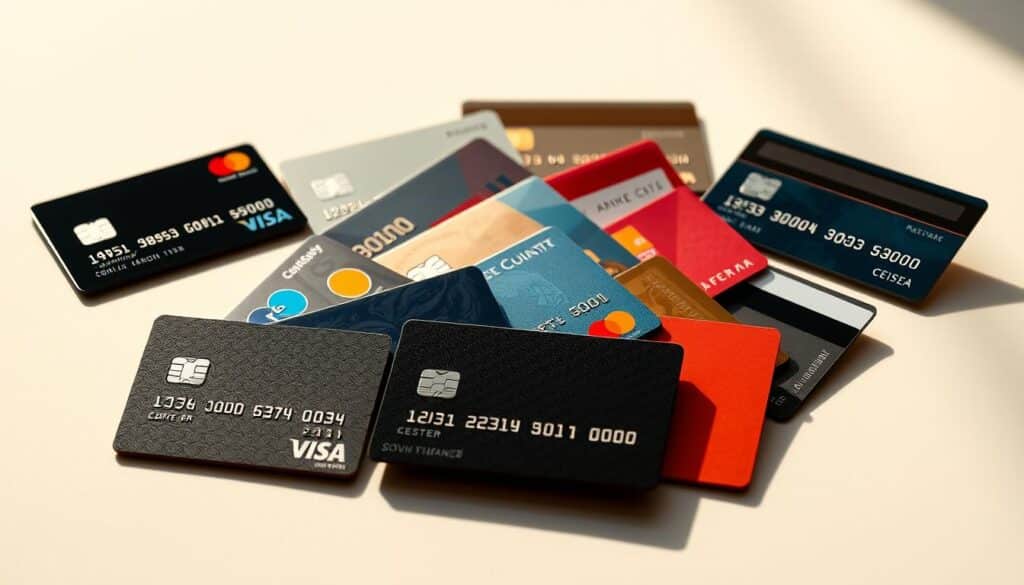
Different card types and what they mean
Cashback cards give you back some of what you spend. For example, Chase Freedom Unlimited and Capital One Quicksilver offer this. You can get a flat-rate back on everything or more back on certain things like groceries or gas.
Travel rewards cards let you earn points for flights or hotel stays. Cards like Delta SkyMiles focus on specific brands. But some cards let you use points with many partners, which is more flexible.
Balance transfer and low-interest cards, like Wells Fargo Reflect, are aimed at saving on interest. They offer 0% APR deals or low rates for those who keep a balance.
Secured cards require a cash deposit and help improve credit scores. Store cards give discounts at specific stores but might have higher rates for other purchases.
Which card type fits your spending habits
If you fly a lot, cards with transferable points or tied to an airline are great. Premium travel cards offer more bonuses like lounge access but they have big fees.
Those who prefer simplicity might like flat-rate cashback cards like Capital One Quicksilver. They’re easy to manage and good for regular spending.
If you often carry a balance, look for cards with low or no APR. Cards designed for balance transfers or with low interest can reduce what you pay in interest and help clear debt sooner.
How introductory offers vary by card
Intro card offers can be bonuses, 0% APR deals, or waived fees. For instance, sign-up bonuses give rewards for spending a certain amount quickly. And 0% APR deals apply to purchases or transfers for a limited time.
Some cards, like those from American Express, offer big points after spending more. Discover cards might double the cash back you earn in the first year for new customers.
| Card Type | Example Issuer | Typical Intro Offers |
|---|---|---|
| Flat-rate Cashback | Capital One Quicksilver | Cash bonus after minimum spend; sometimes 0% APR |
| Category Cashback | Chase Freedom Unlimited | Tiered bonus categories; occasional bonus multiplier periods |
| Co-branded Travel | Delta SkyMiles (American Express) | Large miles bonus with higher spend; airline perks |
| General Travel | Chase Sapphire or similar | Transferable points and high-value sign-up bonuses |
| 0% APR / Balance Transfer | Wells Fargo Reflect | 0% APR for 6–21 months on purchases or transfers |
| Secured Card | Discover it Secured | Help build credit; some offer cashback and intro APR |
| Store / Retailer Card | Major retailers’ branded cards | Discounts and special financing offers |
Match the card type to your goals. Consider what you spend on regularly, your travel plans, and if you can hit a sign-up minimum. This way, you can pick the best card for your spending and find intro offers that add value.
Top Places to Find Exclusive Card Promotions
Looking for the best deals needs a bit of work. Start with official bank sites and reliable aggregators to find special rewards. This way, you’ll get promotions that fit your spending habits and travel plans.
Bank and issuer websites
Head directly to Chase, American Express, Citi, Capital One, and Discover for trustworthy offers. They have special pages for bonuses and agreements. Sometimes, they offer deals like lower spend requirements or higher credits for certain applications.
Comparison portals and cashback sites
Check out NerdWallet, Bankrate, and The Points Guy to see benefits and fees compared. Cashback sites like Rakuten and TopCashback offer extra deals when you apply through their links. This adds more value to your card’s rewards.
Limited-time offers via email and newsletters
Sign up for emails from card issuers, travel sites, and deal places like Slickdeals for immediate promos. Mail offers and targeted deals might have better terms or easier spending limits. Getting these offers early can give you a lead on special deals.
Use various sources for the best deals. Compare bank offers, websites, and emails to find big bonuses without extra spending. Spending a few minutes regularly can increase your rewards and benefits over time.
Maximizing Sign-up Bonuses and Intro Offers
Sign-up bonuses can really boost your value if you plan and use smart habits. Start by planning for future expenses and bills to cut unnecessary costs. Keep emails and statements to track your progress and avoid surprises.
Avoid debt while meeting minimum spends with these steps. Use a new card for daily expenses like groceries and bills. If allowed, pay large bills like taxes with your card. Also, adding authorized users can help, but keep an eye on their spending.
Be aware of issuer’s rules on what counts as a purchase. Returns or some sales may not help you meet your goal. Keep all receipts to make sure you get your bonus, even if there are questions later.
When you apply for cards matters a lot. Be mindful of specific rules by Chase or American Express. Spread out your applications to avoid too many checks on your credit at once. This helps avoid a drop in your credit score and gets you closer to approval.
Several common errors can make you lose bonuses. One big mistake is not meeting the spending target in time. Returns and buying certain gift cards might lower your qualified spending. Quickly opening many cards or closing one too soon might make you lose bonuses or offers.
Make a checklist for each card’s bonus: when you applied, when you need to have spent enough, and what counts. Set reminders and review monthly to keep on target. These tips can help you get the most out of new cards and keep your bonuses safe.
Managing Multiple Cards for Maximum Benefit
Handling many credit cards can increase rewards and options. A straightforward approach reduces stress, cuts costs, and protects your credit score. Plus, you get to enjoy more benefits.

Begin by getting due dates and billing cycles in order. Aligning due dates to one day helps avoid missed payments. Utilize calendar reminders and auto-pay for the minimum amount to dodge late fees.
Watch the timing of your statement closing dates closely. Moving a purchase can affect the statement it appears on. This strategy boosts reward maximization, interest-free periods, and budget management.
Think carefully before closing a credit card account. Only close it if the costs beat the benefits, and you don’t plan to use it. Switching to a no-fee card can keep your credit history intact and credit limits high.
Before closing a card, talk to the card issuer’s team. Companies like Chase, American Express, and Citi may offer to waive fees. They might also let you switch to a simpler card.
Keeping your credit score up means managing how much you owe and how long you’ve had credit. Keep your credit use under 30% if you can, and even below 10% for the best results. It’s smarter to spread out your debt than to overload one card.
When applying for new cards, spread out your applications. Keeping older accounts open with small, regular charges helps keep your credit history age healthy.
Regularly check your credit using free tools like Credit Karma or Experian. Also, yearly, get a full report from annualcreditreport.com. Frequent reviews help spot mistakes early and address issues impacting your credit score swiftly.
Safety, Fraud Prevention, and Customer Support
Keeping your accounts safe is easy with daily habits. Always be mindful of card security, whether you’re shopping online or in-store. This helps reduce risks and lets you sleep better.
Best practices for secure card use online and in-store
When available, use chip-and-PIN or contactless payments. Mobile wallets like Apple Pay and Google Pay keep your real card number safe by using a unique token for each transaction.
Turn on transaction alerts and use two-factor authentication for your accounts. Check your account weekly. Also, make sure your passwords are strong and unique.
Only shop on secure websites that use HTTPS. Avoid making purchases over public Wi-Fi. Use virtual card numbers for one-time subscriptions to protect your real card details.
Steps to take if your card is lost or compromised
Act quickly if you lose your card or think it’s compromised. Immediately call your card issuer to freeze or cancel it. This is a crucial step to minimize damage.
Go through your recent charges and report any that you didn’t make. Ask for a new card and update any automatic payments with the new details.
Visa, Mastercard, American Express, and Discover offer zero-liability for unauthorized charges if you report them quickly.
How to effectively work with customer service and dispute charges
Keep track of your purchases with timestamps and save receipts. Use the issuer’s secure messaging for a written record that you can refer to later.
If the first customer service rep can’t solve your issue, ask to speak with a supervisor. Be persistent but polite, and always follow up in writing to make your case stronger.
Learn about your rights under the Fair Credit Billing Act regarding disputing charges. Know the investigation timelines. If your problem isn’t fixed, file a complaint with the Consumer Financial Protection Bureau.
Extra Tips to Save More with Card Deals
Smart saving involves combining offers and planning your buys. Mix deals, coupons, and card perks to make your money go further. Checking portals and activating bonuses can really add up.
Combining card offers with coupons and store sales
Combine a store sale, a coupon, and a rewards card for big savings. For instance, combine a 5% store promo, a manufacturer coupon, and a 3% cashback card for more value.
Only use store credit cards if the perks beat the interest risks. Keep track of return and price-match policies to protect your savings if you need to return something.
Leveraging shopping portals and special merchant links
Use Rakuten, TopCashback, or airline shopping portals like United MileagePlus Shopping for extra portal bonuses. Sometimes portals offer higher rates temporarily, so always check before making big purchases.
Keep an eye on how portals pay out and choose your preferred method. Combining portal promos and card offers is a smart way to get the most from your deals.
Using category bonuses and rotating categories strategically
Turn on rotating category bonuses, like Chase Freedom Flex, as they become available. Align groceries, gas, and dining purchases with the card offering the best rewards that quarter.
Make a plan by matching major spends with high-reward quarters. Changing your card based on the rotating category can boost your savings when planning large expenses.
| Strategy | Practical Step | Ejemplo |
|---|---|---|
| Stacking offers | Combine coupons, sales, and card rewards | 5% store promo + $10 manufacturer coupon + 3% cashback card |
| Shopping portals | Compare Rakuten, TopCashback, and airline portals before checkout | Portal 6% back + 2% card reward = 8% total return |
| Rotating categories | Enroll and plan purchases around quarterly bonuses | Grocery quarter: load bulk buys to earn top-tier points |
| Store credit cards | Use only for clear promotional financing or extra discounts | Zero-interest promo for a major appliance purchase |
| Tracking and timing | Keep a calendar of portal promos and category activations | Schedule big purchases when portals and bonuses align |
Conclusión
This conclusion gives you tips on picking the right card and getting the most from it. Choose cards like Chase Freedom for cashback or American Express for travel perks, based on how you spend. Always check the fine print to avoid surprises with fees and rewards.
Look at sites like Bank of America, Citi, and Capital One for the latest deals. Make big purchases when you can get sign-up bonuses or no interest. And use deal newsletters and portals to make your money go further.
Keep your accounts safe by setting up alerts and autopay. And keep your credit score healthy by managing your cards well. Close or change cards only if it makes sense for you. Remember, the best card is the one that suits your spending and savings habits.
Preguntas frecuentes
What types of cards does this guide cover?
This guide talks about various cards. You’ll find details on credit and debit cards. These include flat-rate and category-based cashback cards. It covers points and travel rewards cards. This means transferable programs like Chase Ultimate Rewards and American Express Membership Rewards. You’ll also learn about co-branded airline and hotel cards. Additionally, it discusses store/retailer cards, balance-transfer, and 0% APR cards. Plus, secured cards for building credit are covered.
How do sign-up bonuses and introductory offers work?
Sign-up bonuses usually mean you must spend a certain amount within a given time. For instance, spend ,000 in three months to earn rewards. Introductory offers may include 0% APR on purchases or balance transfers for a time. Or a waived first-year annual fee might be part of the deal. Always look at the issuer’s Cardmember Agreement for precise terms.
When does it make sense to pay an annual fee for a premium card?
Paying an annual fee makes sense when the benefits surpass the cost. Let’s talk about cards like Chase Sapphire Reserve or The Platinum Card from American Express. Their benefits, like travel credits or lounge access, can really pay off for those who travel a lot.
How can I maximize sign-up bonuses without overspending?
Achieve the minimum spend with necessary purchases. Think groceries, utilities, insurance, and taxes where allowed. Use card-friendly payment methods. Adding authorized users can help, but avoid buying things you don’t need. This can lead to debt. Also, keep track of your spending to stay on target. Avoid returns or refunds as they can reduce your qualified spending.
What are the best tools to compare card offers?
Great tools for comparing card offers are found online. NerdWallet, The Points Guy, Bankrate, CreditCards.com, and Credit Karma are all reputable. They each have their specialties. The Points Guy focuses on travel, NerdWallet on balancing fees and rewards. Bankrate is good for APR/fee comparisons. Check various sites and the issuer’s webpage for the latest offers and agreements.
How do foreign transaction fees and APRs affect card value?
Foreign transaction fees can add 1–3% on purchases made abroad. This can eat up any rewards. APR is important if you carry a balance because interest can cancel out rewards. Look for low APR or 0% APR cards if you carry balances. Trying to pay in full each month is best if you can.
What are common fine-print traps to watch for?
Be aware of traps like foreign transaction fees, and penalty APRs for late payments. Also, check for minimum redemption thresholds and categories where you must opt-in. Watch out for excluded merchants in bonus categories, and limitations on offers. Always stay updated with issuer’s changes to the Cardmember Agreement.
How should I time multiple card applications for the best results?
Understand the rules, like Chase’s 5/24 or American Express’s once-per-lifetime limits. Space out your applications to minimize hard inquiries. Align new accounts with big planned purchases. This strategy lessens credit score impact and helps you meet bonus requirements efficiently.
Is it better to get a cashback card or a points/miles card?
Your choice depends on your goals. Cashback cards are simple and flexible. Points and miles cards can give great value to travelers. For frequent travelers, premium travel cards with benefits like lounge access are often worth the higher fees.
What strategies help manage multiple cards effectively?
To manage cards well, synchronize due dates or use autopay to dodge late fees. Keep your utilization low, and hang onto older accounts for credit history. Sometimes, downgrading to a no-fee card is smarter than closing an account. Also, reminders and credit monitoring services keep you on track.
How do I protect myself from fraud and unauthorized charges?
Use transaction alerts and two-factor authentication. Tokenized wallets like Apple Pay and Google Pay add security. Only shop on secure HTTPS websites and avoid public Wi-Fi for purchases. If your card is lost or compromised, contact your issuer right away. They can freeze or cancel the card and settle disputes. Major networks offer protection against unauthorized charges.
What should I do if a bonus doesn’t post or a charge is disputed?
Keep your application confirmations and records of qualifying spending. Reach out to customer service with details and escalate if needed. Use in-app messaging for a record. If issues persist, filing a complaint with the Consumer Financial Protection Bureau under laws like the Fair Credit Billing Act is an option.
Where can I find exclusive issuer or portal-only offers?
Look on issuer websites like Chase and American Express for special deals. Comparison and cashback portals also have exclusive offers. Sign up for emails from issuers and travel-focused sites for the latest deals. Following The Points Guy and deal sites can alert you to special promotions.
How can I stack card rewards with other discounts for extra savings?
Stack card rewards with sales, coupons, and shopping portals for more savings. Use a card with a category bonus through a portal like Rakuten. Remember to apply coupons. Keep track of portal payouts and follow the rules.
Are balance transfers and 0% APR offers worth pursuing?
These offers can be a good deal for managing debt without interest. Look at the fees, length of the promo, and the APR after. Offers from Discover and Citi can be worthwhile. Plan to pay off the balance before the promotion ends.
How do store cards differ from general-purpose cards, and when do they make sense?
Store cards can offer big discounts or special financing. However, they often have higher APRs and limited use. They’re worth it for frequent shoppers during big sales or for needed financing. Just be careful to not carry a balance at high interest rates.
What records should I keep to protect bonus eligibility and resolve disputes?
Save everything: application confirmations, emails, screenshots of bonuses, and statements. Keep receipts for big purchases and messages with issuer reps. This documentation can help with disputes or when discussing offers with your issuer.
How often should I check card offers and market changes?
Regularly visit issuer sites and comparison portals, especially if you’re after bonuses or making big buys. Newsletters from The Points Guy and NerdWallet keep you informed. This way, you won’t miss out on time-sensitive offers.
Contenido creado con la ayuda de Inteligencia Artificial.